JRJoshua RandallSystems. Software. Possibility.

ABOUT ME / EXPERIENCE / RÉSUMÉ / DIRECTION

I build across layers.

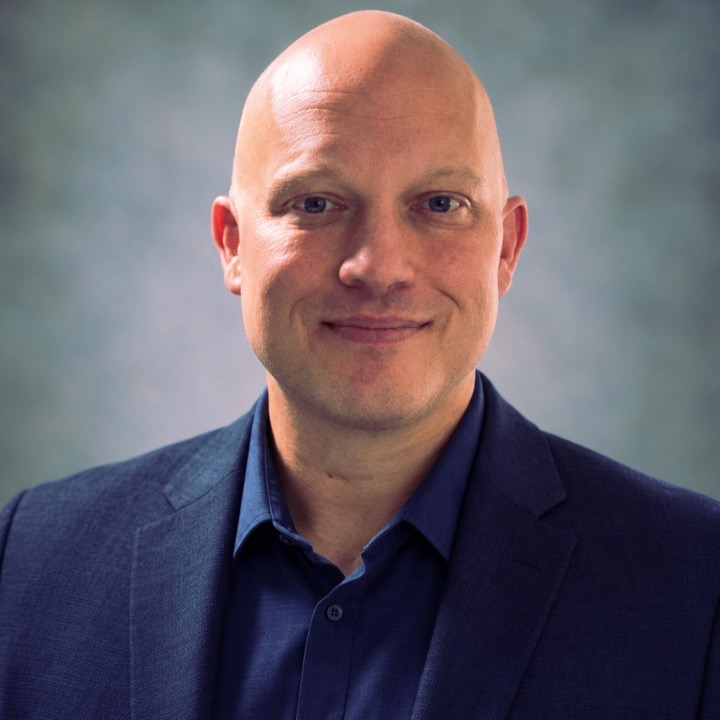
I’m Joshua Randall: a systems engineer, infrastructure architect, software builder, technical leader, and engineering student. I’ve spent more than 25 years learning how technology behaves in the real world—then using that experience to design systems that are clearer, safer, more reliable, and easier to recover.

My background reaches from desktop support, networking, Windows and Linux administration, enterprise messaging, virtualization, cloud, identity, endpoint engineering, security and data centers through automation, software, robotics, AI, high-performance computing, and quantum systems. The common thread is systems thinking: understand the dependencies, make the behavior observable, automate what should be repeatable, and design for failure before failure arrives.

25+ years in technologyInfrastructure + systems engineeringSoftware + automationEngineering + quantum study
Joshua Randall
Systems. Software. Possibility.

THE THROUGH-LINE

Curiosity turned into a career. The career turned into a deeper engineering path.

I started in information technology in 1998 and grew through support, networking, systems administration, enterprise migrations, consulting, infrastructure architecture, field engineering, cloud, security, automation, and technical leadership. Working across those layers taught me that the hardest problems rarely belong to a single product. They live in the relationships between systems, people, processes, failure modes, and constraints.

That is why my work now crosses disciplines. I write Python and PowerShell because infrastructure should be automatable. I study software because operational systems increasingly are software. I study mathematics and physics because advanced computing rests on both. I explore AI, distributed systems, HPC, robotics, and quantum technologies because the next generation of computing will require people who can reason across hardware, software, infrastructure, and scientific models rather than treating them as isolated specialties.

I also build outside traditional infrastructure: interactive learning systems, scientific visualizations, AI experiments, automation tools, games, and browser labs. Building is how I test whether I actually understand something. If an idea cannot survive contact with implementation, debugging, measurement, and another person trying to use it, the understanding is not finished.

TECHNICAL EXPERTISE

Depth where the layers meet.

My strongest work happens when several technical domains have to behave as one system.

01Infrastructure, cloud & data center

Windows and Linux, Azure and AWS, virtualization, compute, storage, networking, hybrid environments, backup, recovery, observability, capacity, performance, and resilient operations.

02Identity, endpoint & security

Active Directory, Entra ID, Microsoft 365, Intune, endpoint management, MFA, Conditional Access, least privilege, BitLocker, Defender/EDR, hardening, patching, vulnerability remediation, NIST 800-171 and CMMC-aligned operational evidence.

03Networking & systems troubleshooting

TCP/IP, DNS, DHCP, VPN, routing, switching, VLANs, wireless, firewalls, LAN/WAN, copper/fiber, server-room infrastructure, dependency tracing, packet/log analysis, root-cause isolation, and Tier III escalation.

04Software, scripting & automation

Python, PowerShell, Bash, SQL, JavaScript, Git, REST APIs, testing, CI/CD, Docker, Kubernetes, Terraform, Ansible, repeatable workflows, reporting, inventory, remediation, and infrastructure-oriented software.

05Reliability, recovery & technical leadership

Incident/problem/change, RCA, backup and restore validation, HA/DR, recovery planning, documentation, SOPs and runbooks, mentoring, vendor coordination, project delivery, cross-team troubleshooting, procurement, lifecycle planning, and translating technical complexity into decisions.

06Advanced and emerging systems

Computer architecture, distributed systems, HPC, GPUs, AI, agent systems, robotics, mathematics, physics, quantum computing, and the interfaces between classical infrastructure and next-generation computation.

PROFESSIONAL EXPERIENCE

Technology that has to work in the real world.

My career has moved from frontline support into increasingly broad responsibility for infrastructure, architecture, automation, security, migrations, recovery, and technical leadership.

2026Copper River Shared Services / ReconCraftIT Administrator · Clackamas, Oregon · May 2026 – Aug 2026

Owned senior escalation across Azure Government, Windows Server, Active Directory/GPO, Entra ID, Microsoft 365, Intune/Autopilot/SCCM, networking, endpoint security, backup/recovery, and NIST 800-171/CMMC-aligned operations.

  • Traced multi-layer server, identity, endpoint, network, storage, access, security, and application dependencies through restoration and RCA.
  • Automated administration and remediation with PowerShell while maintaining controls, evidence, SOPs, and runbooks.
2025–2026Hemmersbach US LLCIT Field Engineer · Oregon / multi-site operations

Delivered autonomous Tier II/III field engineering across roughly 40–50 customer sites supporting endpoints, servers, networking, printers, specialized systems, server rooms, and Microsoft services.

  • Performed imaging, hardware repair, rack/stack, RAID/storage work, copper/fiber troubleshooting, firmware, provisioning, networking, and smart-hands escalation.
  • Owned ServiceNow work through verified closure and coordinated project teams, OEMs, vendors, and remote engineering groups.
2019–2025Phoenix Technology / Self-EmployedOwner · Senior IT Infrastructure Consultant

Worked as an outsourced IT department, fractional technology leader, infrastructure architect, and senior escalation engineer for organizations ranging from small businesses to environments of roughly 500 users.

  • Designed and operated Windows/Linux, AD/GPO, Azure/AWS/hybrid, VMware/Hyper-V, Microsoft 365, networking, firewalls/VPNs, storage, Citrix, monitoring, endpoint, backup, DR and business systems.
  • Led greenfield builds, migrations, refreshes, security improvements, automation, documentation, vendor selection, budgets, procurement, implementation, testing, cutover, rollback, validation, training, and handoff.
2016–2019CBRE / AmazonMaterials Management Specialist · IT Systems Support

Supported high-availability fulfillment technology spanning Windows/Linux systems, servers, networking, scanners, wireless devices, conveyor and material-handling systems, sensors, motors, control cabinets, PLC-connected equipment, and Kiva-era Amazon Robotics environments.

  • Isolated mechanical, electrical, controls, network, hardware, and software failure domains where downtime directly affected throughput.
  • Partnered with Operations, Facilities, IT/networking, controls/automation, and vendors during incidents and deployments.
2014–2016Phoenix Technology Inc.Junior Systems Administrator

Built and administered Windows Server, Active Directory, GPO, DNS/DHCP, file/print, IIS, PKI/certificates, Exchange-era messaging, VMware, Hyper-V, storage, backup/recovery, networking, VPN, Wi-Fi, monitoring, patching, and migrations.

2012–2014ServerlogicEmail Migration Engineer · Portland, Oregon

Engineered approximately 20 large enterprise Exchange-to-Office 365 / Exchange Online migrations across healthcare, regulated utility, and distributed enterprise environments, including discovery, readiness, identity, federation, DNS, mail flow, certificates, pilots, migration waves, validation, remediation, and handoff.

1998–2012Earlier Information Technology CareerHelp desk · desktop/field support · networking · systems administration

Progressed through successive Microsoft and Cisco generations while supporting workstations, servers, enterprise email, authentication, LAN/WAN, VPN/remote access, printers, peripherals, deployment, patching, antivirus, scripting, escalations, documentation, projects, and user/technician training.

RÉSUMÉ / PROFESSIONAL RECORD

A long technical path, still moving forward.

The résumé is available as a downloadable source document. This page carries the context around it so the record is more than a list of technologies.

Download master résumé ↧
Phone
(503) 752-2278
Email
joshprandall@gmail.com
OSU
randjosh@oregonstate.edu
GitHub
github.com/joshprandall ↗︎
LinkedIn
Joshua Randall ↗︎

Microsoft: AZ-900 · AZ-104 · AZ-305 · AZ-400 · AZ-800/801 · MS-102 · MD-102 · MS-700 · SC-300 · MCP · MCSA · MCSE · MCITP

Infrastructure / network / security: CompTIA A+ · Network+ · Security+ · Linux+ · Server+ · Cisco CCNA · VMware VCP

Vendor / field: Lenovo · HP · LSCE Server / Storage and additional OEM technical credentials

EDUCATION & CONTINUING STUDY

Experience gave me the questions. Engineering gives me new ways to answer them.

Oregon State University logo

Oregon State University

Dual major: Electrical & Computer Engineering + Computer Science · In progress

Minors: Data Science · Mathematics · Physics · Honors College

Massachusetts Institute of Technology

MIT Center for Quantum Engineering

Online professional development quantum curriculum via MIT xPRO · Tuition-based professional study · In progress

Applied technical foundation

BAS Information Technology · AAS Computer & Networking Technology

Full-stack/software study through Coding Temple and freeCodeCamp, plus continuous independent technical education.

DIRECTION

From operating complex systems to helping design the next generation of them.

My long-term direction sits at the intersection of systems architecture, high-performance computing, distributed systems, AI, and quantum technologies. I am especially interested in the boundary between hardware and software: how compute, memory, networks, accelerators, orchestration, verification, security, and human interfaces become one usable system.

Quantum computing is part of that path, not a replacement for classical computing. The problems I care about require both: dependable classical infrastructure and software around specialized quantum capabilities, with rigorous verification and clear boundaries about what each technology can and cannot do.

Project MIND is the broadest expression of that direction: an engineering vision that combines classical AI/HPC, specialized agents, structured knowledge and verification, robotics or laboratory interfaces, and quantum computing as a specialized accelerator. The purpose is practical—accelerate learning and scientific work while keeping human judgment, evidence, and system boundaries visible.

HOW I WORK

A few principles that keep showing up.

  1. Understand the whole system.A local fix is not enough when the failure lives in a dependency.
  2. Automate the repeatable; verify the important.Automation should make work more inspectable, not more mysterious.
  3. Design for recovery.Availability is incomplete if restore, rollback, evidence, and ownership have not been considered.
  4. Build to learn.Projects, labs, experiments, and software turn theory into something testable.
  5. Make difficult ideas accessible without making them inaccurate.Good technical communication should increase understanding, not hide complexity behind jargon.

CONNECT

Good systems start with a conversation.

Infrastructure, engineering, software, technical leadership, quantum systems, AI, or the next difficult problem.

Email me ↗︎GitHub ↗︎LinkedIn ↗︎

Explore the portfolio

Escape to close · Tab to navigate results